How to Stage Vacant Rental Unit Photos Without Buying Furniture
Make an empty unit feel understandable online without a truck, a warehouse, or a month of rent in furniture.
The short version
Start with clean photos of the real vacant unit, then stage only the rooms where furniture explains scale: usually the living room and primary bedroom. Keep the furniture neutral and realistically sized, label virtual staging clearly, and fill the rest of the gallery with actual photos of the kitchen, bathrooms, storage, exterior, and amenities.
A vacant apartment is easier to clean and easier to photograph, but it is harder to understand in a thumbnail. Bare rooms hide scale. A bedroom becomes an empty rectangle; a living room becomes a question about where the sofa belongs. Renters usually do not need a decorator's vision. They need proof that their ordinary life fits.
That is why staging has a useful place in rental marketing. The smart version is modest: prepare the actual unit, photograph it cleanly, then use a few deliberate furniture cues to show function and scale. You do not need to furnish every room, and you should never make an unfurnished lease look furnished.
Fix the real room first
Staging cannot compensate for a unit that looks unfinished. Remove cleaning supplies, paint cans, contractor tools, discarded blinds, and anything left after turnover. Replace burned-out bulbs, open the window coverings, and clean the glass. A bright empty room has a better foundation than a dark room full of maintenance evidence.
Photograph the unit before adding any furniture, physical or virtual. Those clean base photos are useful for the listing, for future turnover marketing, and for any disclosure that makes the visualization clear. They also let you verify that no door, window, or permanent feature changed during the process.
Prioritize rooms that answer a scale question
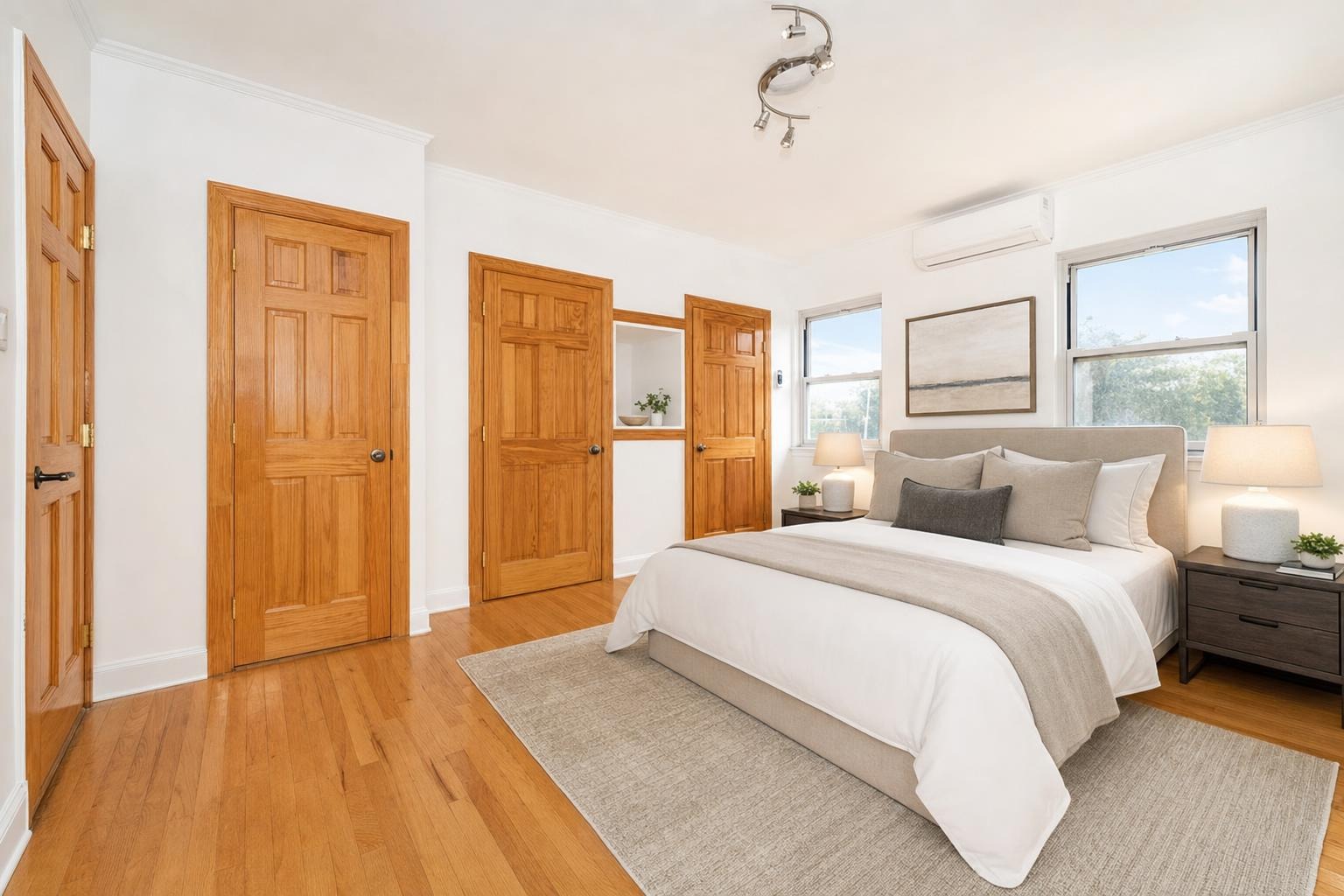
Spend your effort where the empty photo creates the most uncertainty. In most rentals that is the living room and primary bedroom. A modest sofa, coffee table, rug, and lamp tell a renter how the living room functions. A bed, two nightstands, and a small dresser tell them whether their bedroom furniture will fit.
- Living room: stage it first when the room is open, narrow, or connected to the kitchen.
- Primary bedroom: use a realistic bed size so renters can judge the room honestly.
- Dining nook or flex space: add a small table or desk only when its purpose is unclear.
- Do not stage every frame: kitchens, baths, laundry, closets, and exteriors usually explain themselves better as clean real photos.
Keep the furniture believable for the rent and room
Rental staging is not luxury editorial styling. Choose a simple, neutral look with furniture that fits the room's real scale. A giant sectional in a compact apartment, a king bed in a room that only fits a queen, or glossy designer furniture in a basic unit does not make the rental feel aspirational. It makes the photo feel unreliable.
Leave paths to doors and closets open. Keep windows, radiators, cabinets, and flooring visible. The architecture is the product; the furniture is merely the measuring tape that helps a renter read it.
Virtual staging is ideal for the photo—not the showing
For a long-term rental, virtual staging often makes more sense than renting furniture. It gives you the scale cues that help the online listing while keeping the unit physically empty for tours and the next tenant's move-in. The limitation is obvious: the image cannot imply that the furniture comes with the lease.
Label every staged image directly on the photo and in the listing language. Pair it with an unstaged image when possible. That simple clarity helps renters trust the visualization and prevents the awkward showing where someone asks whether the staged sofa is included.
Build an honest mixed gallery
The strongest vacant-unit gallery usually contains mostly real photos plus two or three clear visualizations. Lead with a true, well-lit hero image or a clearly labeled staged living room. Then show the actual kitchen, baths, exterior, laundry, closets, and amenities. Add a staged bedroom where it resolves a real scale question.
This balance does more than satisfy disclosure. It shows the renter you are confident in the property as it exists. The stage explains the potential; the rest of the gallery proves the unit.
Use the photos to get better tours
Good vacant-unit photos do not just attract more clicks. They help the right prospects self-select before they schedule a showing. A renter who can see the living room, understand the bedroom scale, and inspect the kitchen online arrives with better questions and fewer surprises. That is the practical payoff of staging: not a different rental, but a clearer first impression of the real one.
Questions people actually ask
Which rooms should I stage in a vacant rental listing?
Stage the rooms where an empty photo makes scale or purpose hard to understand, usually the living room and primary bedroom. A dining nook or flex space can be worth staging when its use is unclear, while kitchens, bathrooms, closets, and exteriors are usually stronger as clean real photos.
Can I use virtual staging for an unfurnished rental?
Yes, virtual staging can help renters understand a vacant room as long as it is clearly labeled and does not imply the furniture is included with the lease. Pairing a staged image with a real vacant photo is the clearest way to show both the room's potential and its actual condition.
Do I need to furnish a vacant rental before taking photos?
No. Clean, bright photos of the actual vacant unit should make up most of the gallery. A few modest staged images can answer the scale questions that an empty room creates without the cost and logistics of physically furnishing the whole property.