How to Make Small Rooms Look Bigger in Listing Photos
Small rooms aren't a liability — bad angles are. Here's how to shoot tight spaces so they feel open.
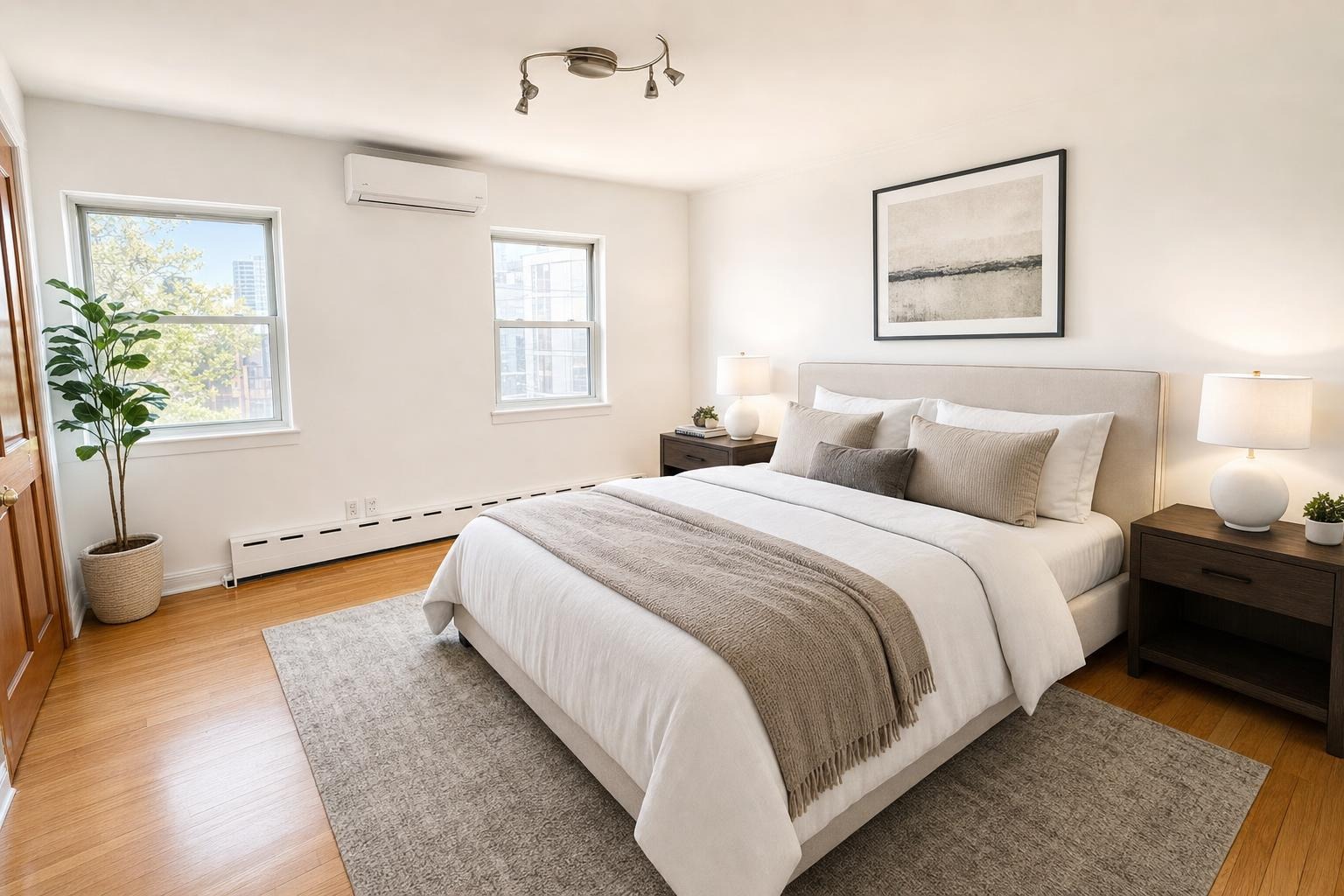
 after · staged
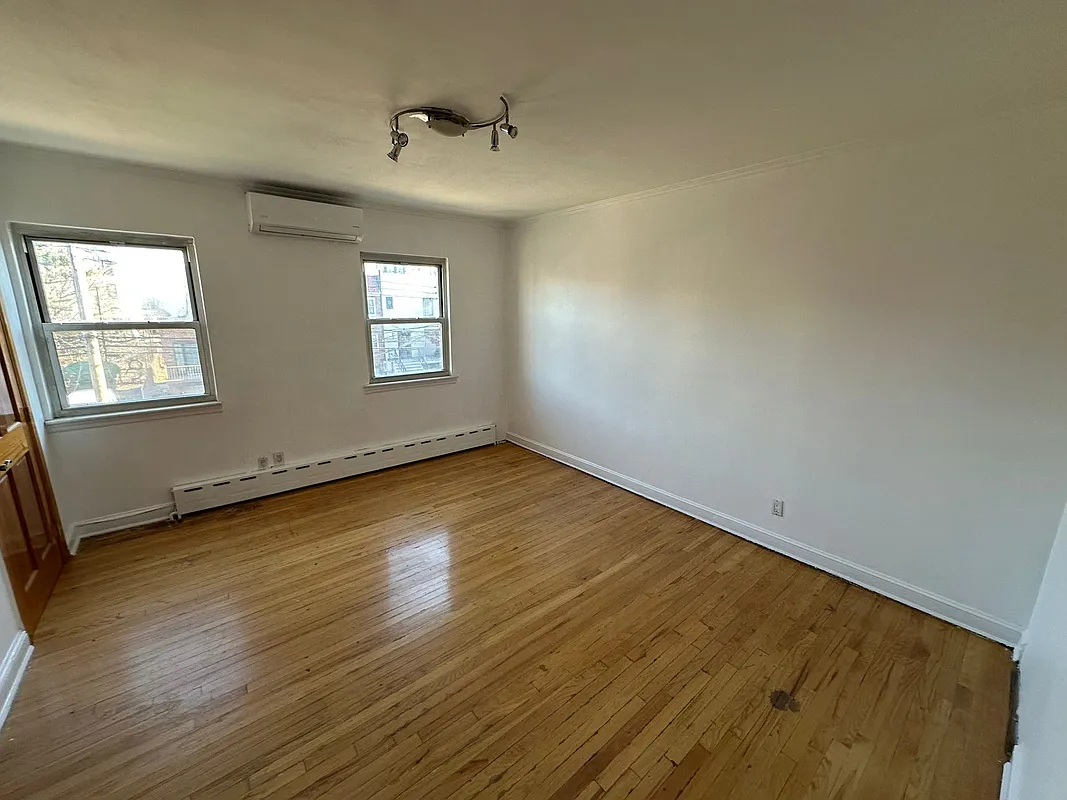
before
after · staged
before
The short version
Small rooms are not a liability, bad angles are. Stand in a corner shooting toward the opposite corner, get the camera height right, keep the verticals dead straight so the walls do not lean in, flood the room with light, declutter hard, and resist the ultra-wide lens that distorts everything.
A small room photographs small for predictable reasons, and most of them are fixable on the spot. The space itself rarely changes — what changes is where you stand, how high you hold the camera, how much light is in the frame, and how much stuff is competing for attention. Get those right and a cramped 10-by-10 bedroom reads as cozy and usable instead of claustrophobic. Get them wrong and even a decent room looks like a closet. Here's how to shoot tight spaces so they feel open and honest.
Shoot from a corner
The single biggest move is standing in a corner and shooting toward the opposite corner. From there you capture two full walls and the largest possible diagonal of floor, which is exactly what tells the eye "there's room here." Shooting flat into one wall flattens the space and hides the depth. Tuck yourself into the corner, point at the far corner, and let the room open up along that diagonal. This is the same principle behind photographing any room for real estate — corners create depth — but it matters most when the room is small and every inch of visible floor counts.
Get the camera height right
Camera height quietly makes or breaks the shot. Aim for roughly chest height — about four to five feet off the floor. Too high and you photograph a sea of floor with a squashed ceiling; too low and the floor vanishes while the ceiling looms. Chest height balances floor and ceiling so the room reads its true proportions. A small tripod set to that height keeps it consistent from room to room, and consistency across the photo set makes the whole listing feel deliberate.
Keep your verticals straight
When you tilt the camera up or down, the vertical lines of the walls start to lean, and a small room with leaning walls looks like it's caving in on the viewer. Keep the camera level so the walls stay perfectly vertical. The trick:
- Turn on your phone or camera's grid and line the wall edges up with the vertical gridlines.
- Hold the camera level — not tilted up at the ceiling or down at the floor.
- If you have to correct a slight lean afterward, straighten the verticals in editing rather than shooting crooked and hoping.
Straight verticals read as calm and spacious. Leaning ones read as cramped, even when the room isn't.
Flood the room with light
Dark rooms always look smaller. Shadows hide the edges of a space, so the eye assumes the walls are closer than they are. Light pushes the walls back. Before you shoot:
- Turn on every light in the room, including lamps.
- Open all blinds and curtains to let in daylight.
- Shoot during the brightest part of the day when natural light fills the space.
- Wipe down windows and mirrors so the light reads clean, not hazy.
A bright, evenly lit small room feels open and airy. The same room shot dim feels like a box.
Declutter hard
Clutter is the fastest way to shrink a space. Every extra object the eye has to process makes the room feel busier and tighter. In a small room you have to be ruthless: clear the countertops, pull the laundry basket and the trash can, take the magnets off the fridge, and reduce the room to its furniture and a couple of intentional pieces. Empty floor and clear surfaces read as breathing room. The goal is for the eye to land on the space itself, not on a pile of belongings crowding it.
Stage with right-scale furniture
If the room is empty or you're staging it, scale is everything. The instinct to "fill" a small room with a full furniture set backfires — it crams the frame and broadcasts how little space there is. Do the opposite:
- Choose a small loveseat over a big sectional, a slim bed frame over a bulky one.
- Use a few well-placed pieces instead of a complete set, so there's visible floor between them.
- Keep the palette light and cohesive — pale walls, light wood, soft neutrals — so the room reads as one continuous, airy space.
- Add a mirror if it suits the room; it bounces light and visually doubles the depth.
Right-scale staging makes a room look furnished and livable while leaving it open. This is exactly the balance to keep in mind when you stage an empty house for photos, and the furniture style you choose matters just as much as the scale — our roundup of interior design styles for listing photos walks through which looks read lightest.
Skip the extreme wide-angle lens
It's tempting to slap on an ultra-wide lens to "fit more in," and a lot of agents do. The problem is that extreme wide angles bend the space — straight lines bow, furniture stretches, and the room looks distorted and, frankly, dishonest. Buyers who show up to a room that's clearly smaller than the photo feel misled, and that erodes trust in the whole listing. A moderate wide angle that captures the room without warping it always beats a fisheye that oversells. Show the space accurately and let the corner angle, height, and light do the work.
Staging a small or empty room? Scale is the whole game.
When you virtually stage a tight space, choosing properly scaled furniture is what keeps it looking open instead of crammed. Stylst keeps your room's real layout and stages it in about 30 seconds for around $1 — available on Google Play.
Put it together
None of this requires a bigger room — just a smarter shot. Stand in the corner, hold the camera at chest height with the walls straight, flood the space with light, clear the clutter, and stage with a light hand and right-scale furniture. Do that and a small room stops apologizing for its size and starts looking like a place someone would happily live. That's the difference between a photo buyers scroll past and one that earns a showing.
Questions people actually ask
How do I make a small room look bigger in photos?
Stand in a corner and shoot toward the opposite corner. That single move gives you the longest diagonal available in the room, shows two walls so the space reads three-dimensionally, and is worth more than any lens or edit. Then get the light up, because dark rooms always look smaller than they are.
Does a wide-angle lens make a room look bigger?
It fits more in, and it makes the room look wrong. Ultra-wide lenses stretch whatever sits near the frame edges, so walls bow, furniture distorts and the proportions stop matching the actual room. Buyers notice at the showing, and a photo that oversold the space costs you more than a modest one.
What camera height works best in a tight space?
Roughly chest height, which keeps the floor and ceiling in proportion and stops you tilting. Shooting from eye level compresses the floor, and shooting from too low exaggerates it. Whatever height you pick, keep the phone perfectly level, because leaning walls make a small room look like it is closing in.