Virtual Staging Subscription vs Pay-Per-Photo: Do the Math
A monthly plan is a bet that you'll use it. Listings are lumpy — three closings in March, nothing in April — and most people lose that bet. Here's the arithmetic.

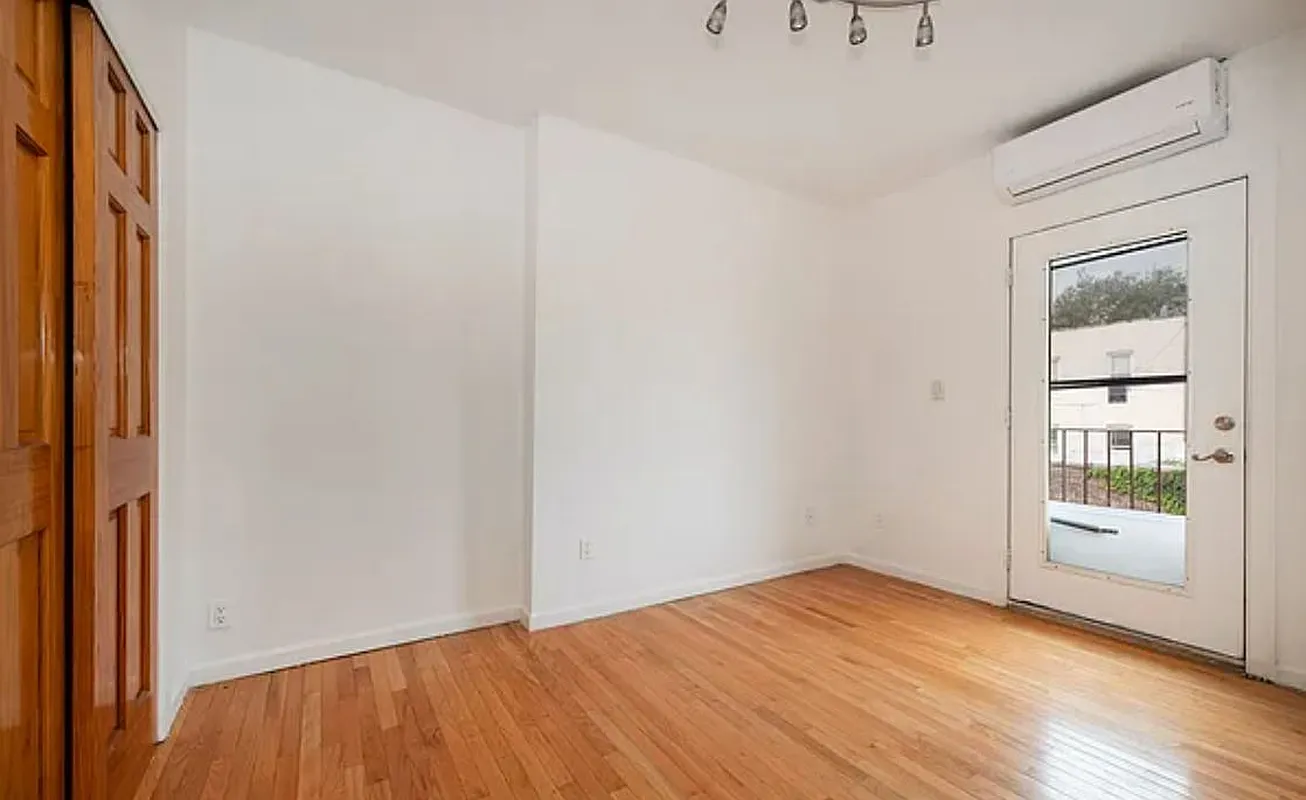 after · staged
before
after · staged
before
The short version
A monthly plan is a bet that you will use it, and listings are lumpy: three closings in March and nothing in April. Divide any plan's price by the best per-photo rate you could get without it and you have the break-even in photos per month. Then ask honestly whether your slow months clear it.
Every virtual staging company would love to charge you monthly. Recurring revenue is a better business than selling photos, and a plan you forget to cancel is the best business of all. That's not a conspiracy, it's just where the incentives point — and it's why the "Most Popular" badge is almost always sitting on the subscription.
The question isn't which plan is best. It's whether your listing flow is steady enough to make a plan worth anything at all — because a subscription is a bet, and what you're betting on is your own volume.
Why listings break subscriptions
Real estate volume is lumpy. Three listings close in March and you're shooting fifty rooms; April is showings, inspections, and one dead deal, and you shoot nothing. Nobody's year divides neatly into twelve equal months, and a monthly plan charges you as if it did.
An unused month isn't a small inefficiency — it's the entire cost of the plan, spent on zero photos. Do that four times a year and the discounted per-photo rate you signed up for is a fiction. Pay-as-you-go inverts it: a slow month costs zero, and the only thing you're out is the credits you actually spent.
The actual numbers
Here's what Stylst charges, so you can do the arithmetic against whatever else you're looking at.
Pay-as-you-go credit packs — one credit stages one photo, no account required on the phone apps, and no recurring charge:
- 10 credits — $16.99. About $1.70 a photo.
- 30 credits — $44.99. About $1.50 a photo.
- 100 credits — $129.99. About $1.30 a photo.
Monthly plans — the same credits and re-roll policy at a lower rate, delivered each month:
- 10 photos — $14.99/month. About $1.50 a photo.
- 30 photos — $39.99/month. About $1.33 a photo.
- 100 photos — $119.99/month. About $1.20 a photo.
Team plans (web only, built around a shared credit pool rather than one person's account):
- 1,250 credits — $1,249 one time. About $1.00 a photo.
- 2,750 credits — $2,499 one time. About $0.91 a photo.
- 750 credits a month — $699/mo. About $0.93 a photo, if you use all 750.
- 9,000 credits upfront — $6,990/year. About $0.78 a photo, if you use all 9,000.
Notice the words doing all the work in those last two lines: if you use. The headline per-photo rate on any plan is a hypothetical — the price you'd pay in the world where you burn every credit you bought. Your real rate is the price divided by the photos you actually generated, and that's a number only you can produce.
A worked example: the solo agent
Take a working solo agent doing two listings a month, shooting about 20 photos a listing. That's 40 photos a month, or roughly 480 a year — and honestly, that's a busy agent, not a beginner.
On pay-as-you-go, 480 photos need five 100-packs: $649.95 for the year. A 30-photo monthly plan plus four 30-photo top-ups costs $659.84 and smooths most of the monthly need. The 100-photo plan costs $1,439.88 for capacity this agent would use only 40% of.
That is the trap, and it is not subtle once you write it down. The plan wasn't a bad deal. It was a bad deal for you.
The break-even, as a single number
Here's the honest way to shop any staging plan: divide the plan's price by the best per-photo rate you could get without it. That's the number of photos a month you have to actually generate before the plan is worth anything.
- The 10-photo plan beats one-time pricing at about 9 photos a month.
- The 30-photo plan breaks even around 27 photos a month.
- The 100-photo plan breaks even around 93 photos a month.
- The $699/month team plan needs roughly 538 photos a month before its price beats 100-pack credits; the shared pool and controls may justify it earlier for a brokerage.
Four hundred photos a month is a real number, and plenty of teams clear it — a 20-agent brokerage with two listings each and 20 photos a listing is doing 800 a month without trying. It's also a number the average solo agent will never see. So: what's your number? Not the aspirational one. The one you can prove from last year.
Which one are you?
Solo agent. A single listing is usually a one-time pack. If you reliably use at least 27 photos every month, the 30-photo plan starts earning its discount; below that, pay as you go avoids paying through a quiet month.
FSBO seller. One listing, one time, maybe 20 photos. Never buy a plan for this. Your first photo on the web is free (watermarked until you buy anything, then it unlocks permanently and clean), and a 30-pack for $44.99 covers a whole house with credits to spare.
Photographer reselling staging. Your volume is real, but the margin is what you're protecting. At 200 photos a month, a 100-photo plan plus a 100-pack costs $249.98; the team plan is for when the shared pool and member controls matter, not merely because the number is bigger.
Brokerage or property-management team. Now a plan actually earns its keep — and the reason is only half the price. A team is a shared pool: the owner invites members by email, sets an optional per-member monthly cap so nobody torches the budget, writes team-wide photo rules so every listing looks like it came from the same brokerage, adds one shared brand kit, and exports a usage CSV when accounting asks. That's the thing you can't buy with a stack of 100-packs and a spreadsheet. We wrote the whole playbook in rolling out virtual staging across a brokerage or team, and the vacancy-side version in virtual staging for property managers.
The credit-expiry trap, and the questions that expose it
The per-photo rate is the number they advertise. The terms are where the money actually is. Before you sign anything — with us or anyone else — get straight answers to these four:
- Do unused credits expire? This is the big one. An expiring credit turns a volume discount into a deadline, and a bulk pack you can't finish is just a bulk pack you overpaid for. (Stylst credits stay valid as long as you use Stylst — buy 100 today, spend the last one next spring.)
- Does the plan auto-renew, and how do I stop it? If cancelling means an email to support and a three-day wait, that's a fee, not a policy.
- Do unused monthly credits roll over? On most monthly plans the meter resets and your slow month is simply gone. Ask, in writing.
- What happens to the balance when I cancel? (On a Stylst team subscription: the pool stops refilling and that's it. Nothing already granted is taken back, and the team keeps working on the credits it has.)
And if a plan is advertised as unlimited, ask what the fair-use limit is. There is always one — GPU time isn't free for anybody — and you want that number in writing.
A plan is only a good deal above a volume you can prove.
We'd genuinely rather you stayed on pay-as-you-go than bought a plan you don't use — an unused plan is how people end up resenting a tool that was working fine. If you're not sure where you land, do the boring thing: buy a small pack, stage a listing, and count your photos for a month. The number will tell you. The team plans are there for when the math flips, and not one photo before.
Where Stylst lands
Individuals can choose monthly plans from $14.99 or one-time packs from $16.99. The monthly option is cheaper only when your real usage stays close to its allowance; the pack costs a little more in exchange for no recurring charge. The economics of what that photo replaces are in what virtual staging costs in 2026, and the head-to-head against the 24-to-48-hour human studios is in BoxBrownie alternative: AI staging in about 30 seconds.
Team plans exist because pooled credits, per-member caps, shared rules, and a usage CSV are a genuinely different product from a bigger pack — not because we think you should be paying us monthly. If your team is doing hundreds of photos a month, the other half of the fix is doing them in one pass: bulk virtual staging: do a whole listing in one pass.
Every result is covered the same way regardless of what you paid: tell us within 24 hours and we'll re-run it free with your feedback — and if it still misses, we'll credit you back.
The bottom line
A subscription is a bet on your own consistency, and listings are the least consistent thing in this business. Take the plan price, divide it by the best per-photo rate you can get without it, and look at the photo count that falls out — if you can't beat that number in a slow month, you don't want the plan. Most people can't, which is why individuals should pay per photo and teams should pool. Buy the small pack, count for a month, and let the arithmetic pick.
Questions people actually ask
Is a virtual staging subscription worth it?
Only if your monthly photo volume stays close to the allowance. Stylst monthly plans are 10 photos for $14.99, 30 for $39.99, or 100 for $119.99. The equivalent one-time packs are $16.99, $44.99, and $129.99, so the monthly discount is useful when you consistently need the photos.
Does Stylst have a monthly plan for individual agents?
Yes. Individual monthly plans include 10 photos for $14.99, 30 for $39.99, or 100 for $119.99. They renew monthly until canceled or paused online. One-time packs remain available for customers who do not want a recurring charge. The former 20-photo plan is grandfathered for its existing subscriber and is not sold to new customers.
Do virtual staging credits expire?
Stylst credits stay valid as long as you use Stylst — buy a pack now and spend it on a listing next spring. Other providers vary, and expiring credits quietly turn a volume discount into a deadline, so ask before you buy in bulk.
What happens to my credits if I cancel a team subscription?
Cancelling simply stops the shared pool from refilling — every credit already granted stays in the pool and nothing is clawed back. You keep spending what you have, and the team, its rules, and its brand kit stay exactly where they were.