Virtual Staging in the UAE: Bayut, Property Finder and Dubai Listings
Handover-condition shells, a buyer who is in another country, and sun that blows out every window by ten in the morning. Here's how the photo set actually has to work.
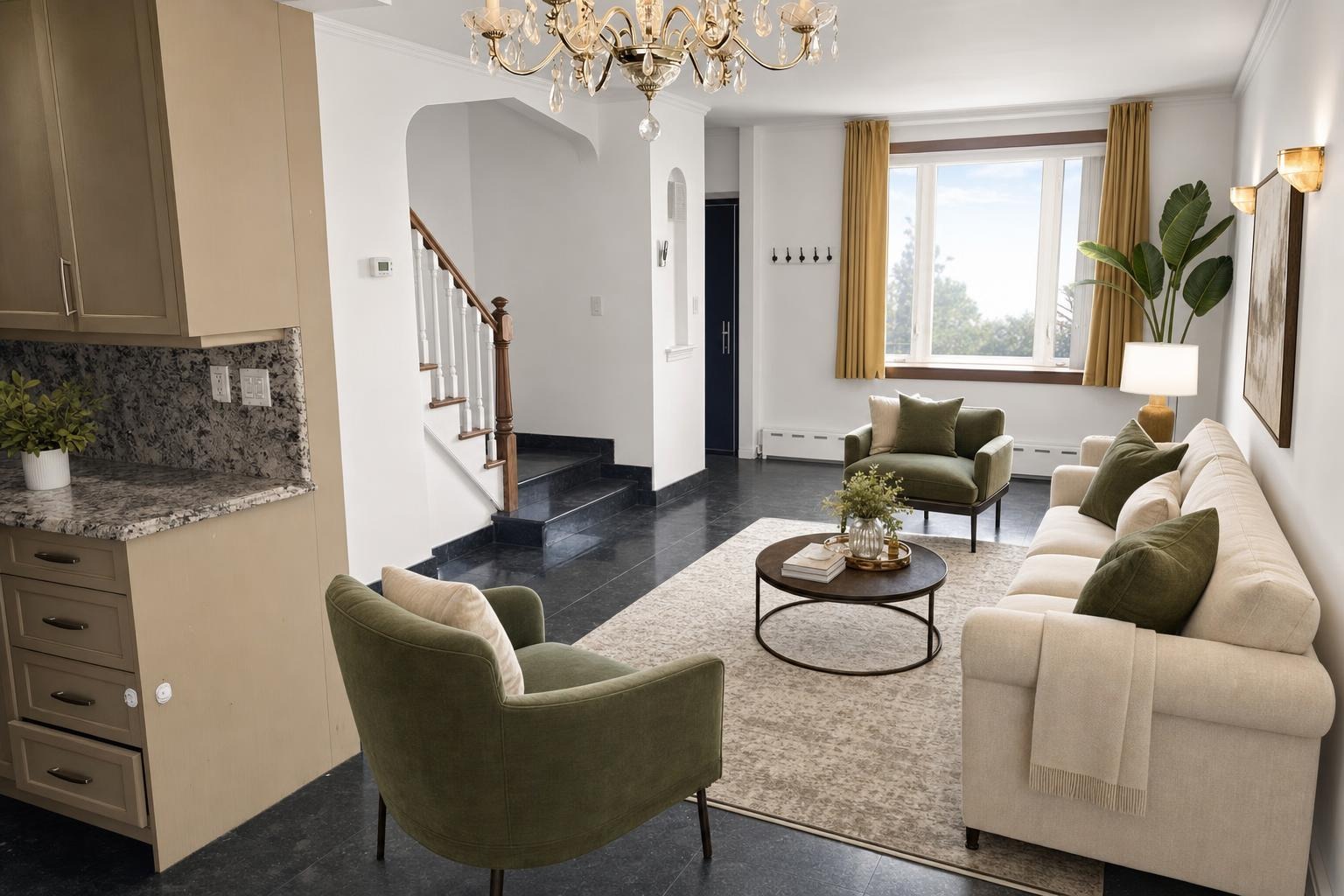
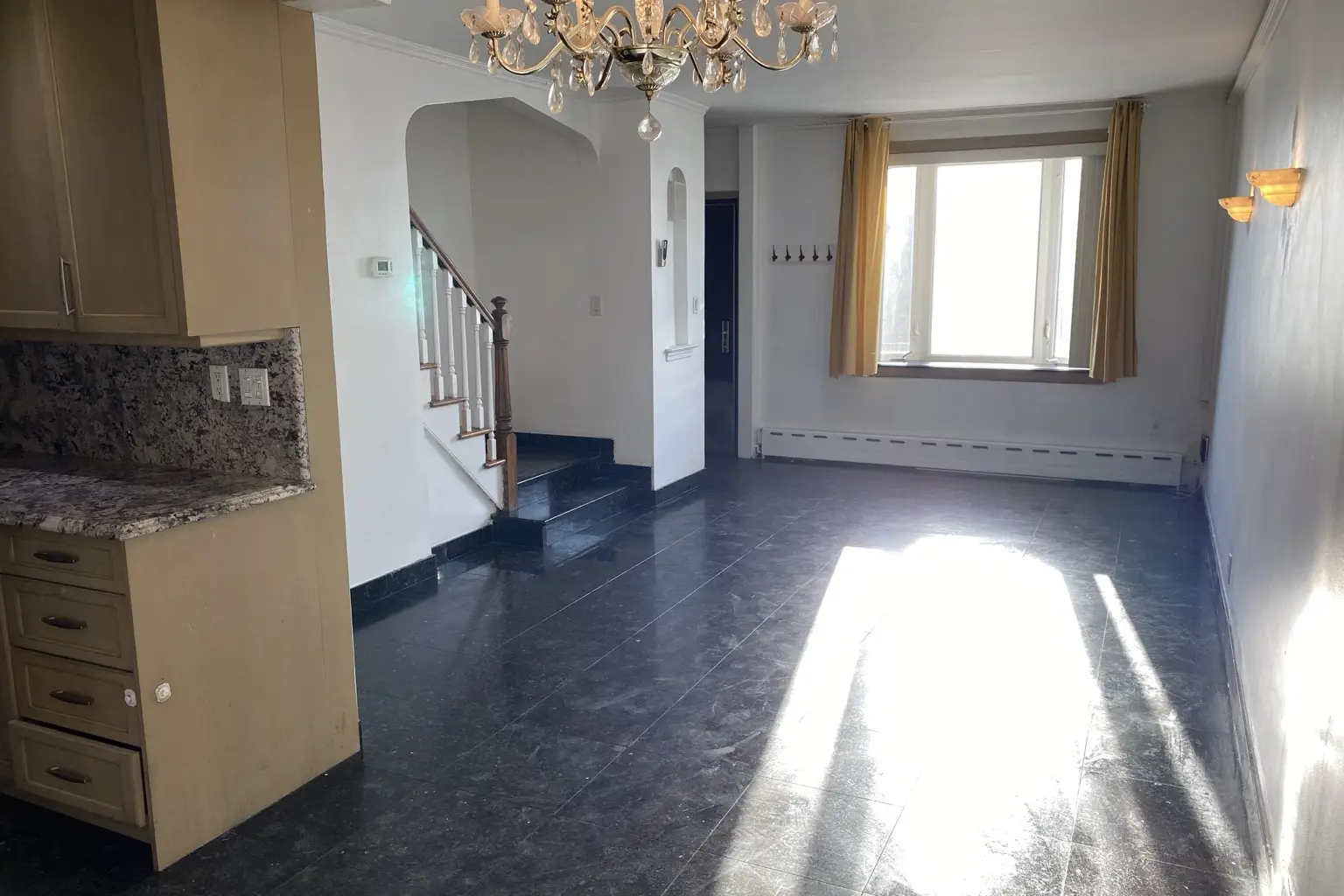 luxury
before
luxury
before
The short version
Handover-condition shells, a buyer who is in another country, and sun that blows out every window by ten in the morning. When the buyer is overseas the photo set is the viewing rather than the thing that earns one, and every Dubai listing advertisement runs through the Trakheesi permit system.
A listing photo in the UAE carries a load it doesn't carry elsewhere. It is frequently the only version of the property a buyer will ever see before they commit. They're in Mumbai or London or Shenzhen, scrolling Bayut on a phone, and your unit gets shortlisted against forty near-identical ones in the same tower on the strength of a thumbnail. Then add the local speciality: an enormous share of that inventory is empty.
The empty handover unit is the hardest photograph in the business
Handover condition means what it says. Tiled or screeded floors, painted walls, a kitchen that may or may not have appliances, wardrobes if you're lucky, nothing else. The brochure sold a furnished render; the unit is a shell, and the owner who bought it off-plan wants it on the portals this week.
An empty room is genuinely hard to read. With no object of known size in the frame the eye has nothing to scale against, so a 1,300 square foot two-bed and a 900 square foot two-bed photograph almost identically when both are bare. Buyers say they can picture the furniture. Mostly they can't. Staging an empty house for photos covers why that anchor object matters more than the furniture around it.
Nor is this passing. Off-plan has been the majority of Dubai residential sales for years — market trackers widely put it above 70% of transactions in 2025 — so bare units arriving at handover and going straight to resale or rental is what the market is made of.
When the photo set is the viewing
In a domestic market, photos buy you a showing and the showing does the selling. Here a large share of buyers are not in the country, so the photo set is not an invitation to a viewing — it is the viewing. They short-list, ask for a walkthrough video, and often sign without standing in the room.
That cuts both ways. Weak photos lose the enquiry outright — there's no showing to rescue them. But a set that oversells gets found out in the most expensive way available: the buyer books a flight. Staging that reads as a styling choice survives that meeting. Staging that reads as a claim about what's included does not.
What the portals actually ask for
Property Finder publishes a listing quality score, and its guidance is refreshingly concrete. Images need a minimum resolution of 800 x 600, or a ratio roughly between 1.3 and 1.8; a 4:3 frame such as 1600 x 1200 scores best. Photos should be bright, high resolution, and genuinely reflect the property, and the number required scales with property type and bedroom count. Don't upload the same image twice, and avoid collages — one element per image.
Bayut's verification badges work on a different principle. For TruCheck the agent physically visits the property and photographs it on the spot in Bayut's own agent app, and those images go to a moderation team. That's deliberate: the verification photo proves the unit is real and available, so it is not the place for a staged image. Keep the two sets separate — verification photos prove the property, marketing photos sell it.
Both portals revise this guidance, so read the current help centre rather than a blog post, including this one. How many photos a listing needs covers the count question.
Permits are the frame around the picture
Advertising property in Dubai runs through Trakheesi, the Dubai Land Department's permit system, supervised by RERA. A brokerage pulls a permit before the advert goes out, the permit number appears on it, and the advert has to match what the permit covers — online, print, billboard or social. Abu Dhabi has gone further with Madhmoun, ADREC's verified listing platform, which checks listing details against official records before a permit issues; Bayut, Property Finder and Dubizzle have integrated with it. Fees and penalties get revised and the figures quoted online disagree, so confirm current numbers with DLD or your compliance team.
The direction of travel is the part that matters. Both systems exist to make an advert match the property on record, and your images sit inside that frame. Labelling a staged photo is not a nicety here.
Label it, and never edit a defect
Write "virtually staged" or "furniture shown is for illustration only" in the caption and again in the description, and include an unstaged shot of the same room. That costs nothing and settles the question before a buyer books a flight to ask it. What you must never do is edit away something real — a crack, a water stain, the neighbouring tower's parking podium in the view. That isn't staging, and no caption saves it. See is virtual staging legal?
Empty unit versus furnished unit: two different jobs
Staging is one tool, and for a big slice of UAE stock it's the wrong one.
- Empty shell — stage it. Furniture into a bare room, disclosed. The handover unit, the off-plan resale, the just-vacated villa.
- Occupied — declutter, don't furnish. A tenanted apartment with a family's things in it doesn't need imaginary furniture; it needs the drying rack out of frame and the exposure fixed. Declutter keeps the real furniture and clears the mess. Virtual staging for occupied homes works through that line.
- Furnished but tired — enhance only. A straight professional edit: brightness, colour, perspective. Nothing added, nothing removed.
The villa and apartment split
Apartments sell on the view and the layout. The view is frequently the entire price premium, so the one thing the photo cannot do is turn the window into a white slab. Interiors are compact and the reception usually doubles as the dining room, so staging it one way tells the buyer what it's for. Condo and apartment listing photos covers tight interiors.
Villas sell on space, the garden and the arrival. More rooms to cover, a pool or a plot, and an exterior that has to look like somewhere you'd want to pull into. A bare villa is the strongest case for staging in the market: all those empty rooms start a buyer doing furniture arithmetic instead of reading the listing.
The light problem, and why dusk is worth more here
Gulf sun sits high and hard most of the day, and much of the housing stock is glass. That produces the region's most common bad photo: a room correctly exposed with a window gone pure white, or a visible view with the interior gone black.
Two fixes, and the first is free. Shoot early morning or late afternoon — the dynamic range you're asking a phone to hold collapses when the sun is overhead. The best time of day for real estate photos gets specific.
The second is the dusk conversion, and it earns more here than almost anywhere, because life in the Gulf happens outside after sunset. A villa exterior, a pool, a terrace, a tower with the skyline behind it — all at their best in the twenty minutes when the sky goes blue and the lights come on, which is exactly the twenty minutes nobody has when they're shooting six units in a day. Day-to-dusk conversion does it from the daytime shot.
What it costs
Stylst is a phone app and a web app. Photograph the room, pick the room type and a style, get a portal-ready image back in about 30 seconds. Monthly plans run from $1.20 to $1.50 per photo; one-time packs run from $1.30 to $1.70 with no recurring charge.
Pricing is in US dollars, but checkout presents and settles in your local currency, so a Dubai agent sees a dirham figure and pays in dirhams at the day's rate. Set that against physical staging at $150 to $300 per room plus delivery and a minimum hire period, and the arithmetic for a two-bed handover unit stops being a conversation. In supported regions your first photo is free: on the web you sign in with your email and that photo comes back as a watermarked preview saved to your account, and buying any pack unlocks it with nothing to redo. On the iPhone and Android apps the first photo is free with no account at all.
Questions people actually ask
Is virtual staging allowed on Bayut and Property Finder?
Virtual staging is widely used on UAE listings, particularly for empty handover and off-plan units, and the portals' published image guidance is about quality and accuracy rather than a named ban on staging. Accuracy is the operative word: label a staged photo as virtually staged in both the caption and the property description, and include an unstaged shot of the same room so a buyer can see the bare unit. Portal rules and regulator guidance both change, so confirm the current wording with the portal and with the regulator before you publish.
Do I still need a Trakheesi permit if the listing photos are virtually staged?
Yes. The Trakheesi permit issued through the Dubai Land Department applies to the advertisement itself, not to how the photography was produced, so it applies whatever your images look like. The permit number has to appear on the advert and the advert has to match what the permit covers. Editing the pictures changes none of that, and fees, categories and penalties are revised from time to time, so check the current requirements with the Dubai Land Department or your brokerage compliance team rather than trusting a figure you read in an article.
How do I photograph a Dubai apartment with floor-to-ceiling windows?
Shoot early morning or late afternoon rather than the middle of the day, and expose for the room rather than the glass. At midday the gap in brightness between an interior and the sun outside is wider than a phone sensor can hold, so you end up choosing between a dark room and a white rectangle where the view should be. If the view is the reason the unit is priced where it is, the view has to survive the photograph.
What does virtual staging cost for a UAE listing?
Stylst is priced in US dollars and works out to between $1.20 and $1.70 per finished photo, depending on whether you subscribe or buy a pack outright. Checkout presents and settles in your local currency, so a Dubai agent sees and pays a dirham figure at the day's rate. For comparison, physically staging a room with hired furniture runs $150 to $300 per room, before delivery, the hire period and a stylist.
The bottom line
The UAE gives you the hardest version of the listing-photo problem and the biggest payoff for solving it: bare units, a buyer who is somewhere else, portals that score your images, a regulator that scores your advert, and light that fights you from nine in the morning. Stage the empties and label them. Declutter the occupied ones and leave the tenant's sofa alone. Run a dusk conversion on any exterior worth showing. Then make sure the unit a buyer walks into after a four-hour flight is recognisably the one they short-listed on a phone. That's the whole job.